10 min read
Need it handled? Call (785) 260-0521
Sewer Line Repair in Lenexa, KS: #1 Plumber in Topeka KS 25+ Years Experience You Can Trust serves Lenexa and the surrounding area. Call (785) 260-0521 for a free estimate.
TL;DR: Sewer line repair in Lenexa ranges from $3,600 to $12,000 depending on the method and line length, according to industry cost estimates. Traditional excavation typically costs $59.67 per linear foot, while trenchless CIPP lining averages $80–$250 per linear foot. Johnson County's clay-heavy soil and Lenexa's aging infrastructure (much of it installed in the 1970s–1990s) make early diagnosis critical. If repair costs exceed 50% of replacement, full replacement is usually the smarter long-term choice.
What Does Sewer Line Repair Cost in Lenexa, Kansas?
When a sewer line fails in Lenexa, the first question homeowners ask is straightforward: how much will this cost? The answer depends heavily on which repair method you choose and the specific conditions of your line. For more details, see sewer backup cleanup in Lenexa.
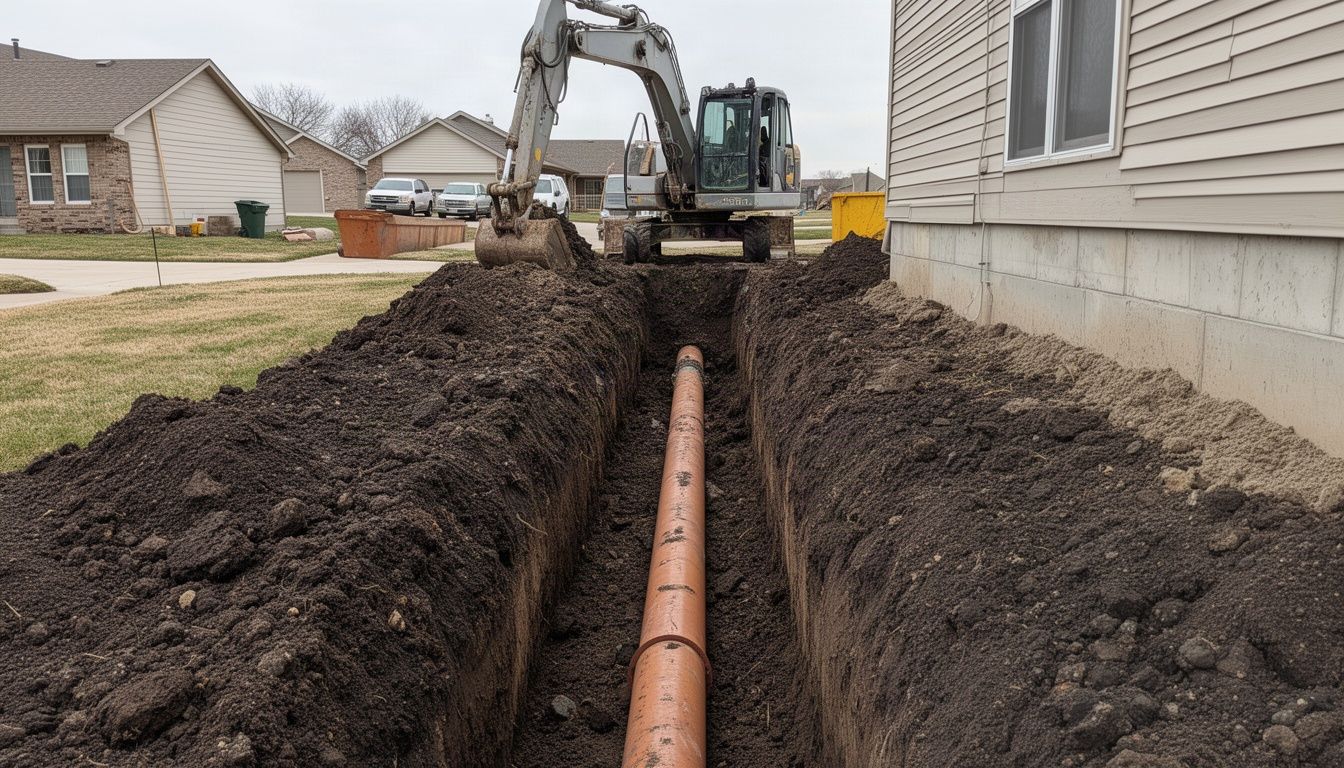
Here in Lenexa, traditional excavation repair – where we dig up the damaged section and replace it – typically runs $59.67 per linear foot. (Usda.gov) On a standard 60-foot lateral from your home to the main, that's roughly $3,580 in labor and materials, plus approximately $350 for a City of Lenexa building permit. This method is reliable and permanent, but it means significant yard disruption, restoration costs, and a longer timeline.
Trenchless pipe lining (CIPP – cured-in-place pipe) costs range from $80–$250 per linear foot. The same 60-foot line would run approximately $4,800–$15,000 depending on pipe size, condition, and access – a range that reflects varying site conditions. Pipe bursting, another trenchless option, falls within similar parameters and works well for full replacements when the old pipe is beyond patching.
Why the price range? Johnson County's expansive clay soils and the age of Lenexa's infrastructure drive costs up. Homes built before 1980 often have clay or cast-iron pipes that are more labor-intensive to access and repair. Root intrusion – common in our area's clay-heavy soil – can complicate the job. A camera inspection (which any reputable plumber will do first) reveals the exact damage and determines which method is feasible.
| Repair Method | Cost per Foot | Best For |
|---|---|---|
| Traditional Excavation | $59.67 | Severe damage, collapsed sections |
| CIPP Lining | $80–$250 | Cracks, root intrusion, joint separation |
| Pipe Bursting | Varies by site | Full replacement, upsized pipe |
Key Takeaway: Trenchless methods preserve your landscaping, but they're only viable if the pipe isn't fully collapsed. A camera inspection is non-negotiable before any quote.
What Are the Warning Signs You Need Sewer Line Repair?
Catching a failing sewer line early can save you thousands in emergency cleanup and prevent sewage backups into your home. Here in Lenexa and the surrounding areas, we see these warning signs repeatedly:
Slow drains throughout the home – not just one fixture, but multiple sinks, showers, and toilets draining sluggishly. This suggests a blockage or collapse in the main lateral.
Gurgling sounds from toilets or drains – especially when you run the washing machine or shower. This indicates air trapped in the line, a sign of partial blockage or joint separation.
Sewage odors inside or outside the home. If you smell raw sewage in the yard, basement, or crawlspace, the line is likely cracked or backing up.
Wet or unusually green patches in the yard – even in dry weather. This points to sewage leaking into the soil, a serious health hazard.
Frequent backups or slow drainage after heavy rain. Lenexa's clay soil doesn't absorb water quickly, and a compromised sewer line can't handle the volume.
Foundation cracks or settling – in rare cases, a collapsed sewer line beneath the foundation can cause structural movement.
Rodent or insect problems – rats and other pests are attracted to sewage leaks.
Lenexa neighborhoods built before 1980 face higher risk because clay and cast-iron pipes deteriorate over time. Joint separation and root intrusion are especially common in our area's soil conditions. If you notice any of these signs, don't wait – call a trusted local plumber in Lenexa to schedule a camera inspection. Early diagnosis prevents catastrophic backups and keeps repair costs manageable.
Sewer Repair Methods: Which Option Is Right for Your Lenexa Home?
Once a camera inspection confirms the problem, your plumber will recommend one of three main repair approaches. Each has distinct advantages and limitations depending on the damage severity and your property layout.
Traditional Excavation Repair
This is the oldest method and remains the gold standard for severe damage. We dig a trench to expose the damaged section, remove the old pipe, and install new PVC or cast-iron pipe. The work is straightforward and permanent – no surprises later.
Pros: Handles any damage type (collapse, severe offset, multiple breaks). Allows pipe upsizing if needed. Permanent fix with no diameter reduction.
Cons: Higher cost at $59.67 per linear foot. Significant yard disruption – landscaping, driveways, and patios may need restoration. Takes 3–7 days depending on line length. Requires a City of Lenexa building permit and inspection.
Best for: Fully collapsed pipes, severe offset joints, or when the line is already partially exposed.
Trenchless Pipe Lining (CIPP)
CIPP involves inserting a resin-saturated felt tube into the damaged pipe and curing it in place, creating a new pipe inside the old one. No digging required.
Pros: Costs $80–$250 per linear foot. Zero yard disruption. Faster – typically one day. Minimal permit hassle. Works on cracks, root intrusion, and joint separation.
Cons: Reduces pipe interior diameter slightly. Cannot repair fully collapsed sections. Not suitable for severe offset joints. Lifespan typically 50+ years, but less proven than new pipe.
Best for: Cracks, root intrusion, gradual deterioration in otherwise structurally sound pipes.
Pipe Bursting
This method breaks the old pipe apart while simultaneously pulling new pipe into place. It's faster than excavation and works well for full replacements.
Pros: Allows pipe upsizing. Faster than traditional dig-and-replace. Moderate yard disruption. Cost-effective for full replacements.
Cons: Requires access points at both ends of the line. Not suitable for lines with multiple bends or severe damage. May not work in tight spaces common to Lenexa's older neighborhoods.
Best for: Full sewer line replacement when the old pipe is beyond repair and you want to upsize.
Should You Repair or Replace Your Sewer Line?
This decision hinges on three factors: the pipe's age, the extent of damage, and the cost ratio between repair and replacement.
Here's the framework we use: If repair costs exceed 50% of full replacement, replacement is usually smarter long-term. This rule accounts for the likelihood of additional failures in an aging system.
Consider a typical Lenexa scenario: a 1962 clay pipe system with multiple cracks and root intrusion. A spot repair (CIPP lining on the worst section) might cost $5,500. Full replacement of the 100-foot lateral runs $10,000. At 55% of replacement cost, you're in a borderline zone. But here's the catch: that clay pipe is 64 years old. More failures are likely within 5–10 years. Replacing now avoids emergency calls and protects your home's resale value.
Repair makes sense when:
- The pipe is less than 40 years old (post-1985 in Lenexa).
- Damage is localized to one section.
- Repair cost is under 40% of replacement.
- The pipe material is PVC or newer cast-iron (not vitrified clay).
Replacement makes sense when:
- The pipe is clay or very old cast-iron (pre-1970).
- Multiple sections show damage on the camera inspection.
- Repair cost exceeds 50% of replacement.
- You're planning to stay in the home long-term or preparing for sale.
Johnson County's clay soil accelerates pipe deterioration. If your Lenexa home was built in the 1970s or early 1980s, the original sewer line is nearing the end of its lifespan. A camera inspection will reveal whether you're looking at a single repair or a system-wide problem.
How to Choose a Sewer Line Repair Plumber in Lenexa, KS
Rather skip the comparison and talk to a real local option? #1 Plumber in Topeka KS 25+ Years Experience You Can Trust serves Topeka, Lawrence and Overland Park and does this day in and day out — reach out and see how they answer your questions.
✓ Recommended locally: #1 Plumber in Topeka KS 25+ Years Experience You Can Trust
Serving Topeka, Lawrence and Overland Park. Call (785) 260-0521 or get in touch »
Hiring the right plumber is as important as choosing the repair method. Here's a five-point checklist to vet contractors before signing anything:
1. Verify Kansas State Board of Technical Professions (KSBTP) License All plumbing work in Kansas requires a current license. Visit the KSBTP website and confirm the contractor's license status. This is non-negotiable – unlicensed work can void your homeowners insurance and create title issues at resale.
2. Confirm City of Lenexa Permit Experience Ask if the plumber has pulled permits in Lenexa recently. They should know the permit process, inspection requirements, and typical timelines. Unpermitted sewer work can complicate a future home sale and may be denied by your insurance company if a claim arises.
3. Require a Camera Inspection Before Any Quote A reputable plumber will camera-inspect the line first, then provide a written estimate based on what they see. If they quote over the phone without inspection, walk away. The camera footage is your proof of the problem and the basis for the repair method.
4. Get a Written Estimate with Warranty Details The estimate should itemize labor, materials, permit fees, and any restoration costs. Ask about warranty on labor and materials. Most reputable shops offer 1–2 years on labor and 5–10 years on the pipe itself.
5. Ask About Insurance and Bonding Confirm the plumber carries liability insurance and is bonded. This protects you if something goes wrong during the job.
Red flags to avoid:
- No camera inspection offered.
- Unusually low bids (often indicate corner-cutting).
- Reluctance to pull a permit.
- No written estimate or warranty.
- Pressure to decide immediately.
When you're ready to move forward, #1 Plumber in Topeka KS 25+ Years Experience You Can Trust offers licensed, insured service across Lenexa and the surrounding Johnson County area. They handle camera inspections, provide transparent estimates, and manage all permit requirements – removing the guesswork from the hiring process.
Recommended Plumbing Repair: #1 Plumber in Topeka KS 25+ Years Experience You Can Trust
Want a local recommendation to start with? #1 Plumber in Topeka KS 25+ Years Experience You Can Trust serves Topeka, Lawrence and Overland Park and handles jobs like this regularly — reach out with your questions and see how they respond.
#1 Plumber in Topeka KS 25+ Years Experience You Can Trust
Serving Topeka, Lawrence and Overland Park
Frequently Asked Questions About Sewer Line Repair in Lenexa
How much does sewer line repair cost in Lenexa, Kansas?
Direct Answer: Sewer line repair in Lenexa ranges from $3,600 to $12,000 depending on the method and line length. Traditional excavation averages $59.67 per linear foot; trenchless CIPP lining runs $80–$250 per linear foot.
Costs vary based on soil conditions (Johnson County's clay soil increases excavation labor), pipe age and material, damage severity, and whether a permit is required. A camera inspection is the only way to know the true cost.
How long does sewer line repair take in Lenexa?
Direct Answer: Trenchless CIPP lining typically takes one day. Traditional excavation takes 3–7 days depending on line length and soil conditions.
Trenchless work is faster because there's no digging or yard restoration. Excavation requires time to dig the trench, remove and replace the pipe, and restore landscaping. Weather and soil conditions in Lenexa can add time – clay soil is harder to excavate, especially in winter. Your plumber should provide a timeline after the camera inspection.
Does homeowners insurance cover sewer line repair in Kansas?
Direct Answer: Standard homeowners insurance typically excludes gradual sewer deterioration. However, sudden accidental damage (like a tree root breaking the pipe) may be covered depending on your policy.
Most policies don't cover wear-and-tear failures. If you want coverage for sewer line problems, ask your insurance agent about a service-line protection rider – an add-on that covers gradual deterioration and backups. These riders are affordable and can save thousands if a major failure occurs. Check your policy's declarations page to see what's covered.
Is trenchless sewer repair available in Lenexa, KS?
Direct Answer: Yes, trenchless CIPP lining and pipe bursting are widely available in Lenexa through licensed contractors.
Trenchless methods work well for cracks, root intrusion, and joint separation in otherwise structurally sound pipes. However, they cannot repair fully collapsed sections or severe offset joints – those require traditional excavation. A camera inspection determines whether your line qualifies for trenchless repair. If it does, you'll save thousands and avoid yard disruption.
Do I need a permit to repair a sewer line in Lenexa?
Direct Answer: Yes, the City of Lenexa requires a building permit for any sewer lateral repair or replacement. Work must pass inspection before backfill.
Unpermitted sewer work can create title issues, void insurance claims, and complicate home sales. Permit fees in Lenexa are typically $300–$400. Any reputable plumber will pull the permit as part of the job. If a contractor suggests skipping the permit to save money, that's a major red flag.
What is the difference between sewer line repair and replacement?
Direct Answer: Repair fixes a localized problem (cracks, root intrusion, joint separation) in an otherwise sound pipe. Replacement removes the entire old line and installs new pipe.
Repair is cheaper and faster but only works if damage is limited to one or two sections. Replacement is necessary when the pipe is severely deteriorated, collapsed, or when repair costs exceed 50% of replacement. For Lenexa homes built before 1980 with clay pipes, replacement often makes more sense long-term because additional failures are likely. A camera inspection and cost comparison will clarify which option is right for your situation.
Next Steps: Get a Local Sewer Repair Estimate
If you're noticing slow drains, sewage odors, or wet spots in your yard here in Lenexa, don't delay. A failing sewer line only gets worse – and more expensive – over time.
The first step is always a camera inspection. This diagnostic tool shows exactly what's wrong, which repair method is viable, and what the true cost will be. Most reputable plumbers offer this service at a modest fee (typically $150–$300), which is often credited toward the repair if you move forward.
#1 Plumber in Topeka KS 25+ Years Experience You Can Trust serves Lenexa and the surrounding Johnson County area with licensed, insured sewer repair and replacement services. They handle the full process – inspection, permit, repair, and restoration – so you don't have to. Call or request a free quote online to get started.
The sooner you address the problem, the sooner you'll have peace of mind and a functioning sewer system.
Ready to Get Started?
For personalized guidance, visit #1 Plumber in Topeka KS 25+ Years Experience You Can Trust to learn how we can help.
More from #1 Plumber in Topeka KS 25+ Years Experience You Can Trust: #1 Plumber in Topeka KS 25+ Years Experience You Can Trust · Emergency Plumber Topeka KS: Fast Leak Repair (2026)