12 min read
Need it handled? Call (785) 260-0521
Emergency Plumbing Leak Repair in Topeka, KS: #1 Plumber in Topeka KS 25+ Years Experience You Can Trust serves Topeka and the surrounding area. Call (785) 260-0521 for a free estimate.
TL;DR: A burst pipe or active leak in your Topeka home requires immediate action – shut off the main water supply, document damage for insurance, and call a licensed Kansas plumber within the hour. Emergency repair costs typically range $400–$1,200 depending on leak type and access difficulty; after-hours service fees run $150–$300 on top of parts and labor. and make pipe bursts and slab leaks common in Topeka, so knowing the difference between a true emergency and a non-urgent repair can save you money and stress.
What Counts as a Plumbing Leak Emergency in Topeka?
Not every leak demands a middle-of-the-night call. (Noaa.gov) (Ks.gov) Understanding what qualifies as a true emergency helps you respond appropriately and avoid unnecessary after-hours charges – though when water is actively damaging your home, speed matters more than cost.
True emergencies require immediate action:
- Burst pipes with visible water spraying or gushing into walls, ceilings, or crawl spaces
- Sewage backups or raw sewage entering your home (health hazard; call the city's emergency line at (785) 260-0521 if the break is street-side)
- Water pooling near electrical panels, outlets, or appliances (electrocution risk; call Evergy at 1-888-LIGHT-SS if power is threatened)
- Slab leaks with water pooling under your foundation or wet spots appearing in your yard (foundation damage accelerates quickly)
- Water heater leaks flooding a basement or utility room
- Pinhole leaks in copper supply lines actively dripping into walls or attics (can cause mold within)
Non-emergencies that can wait until business hours:
- Slow drips under sinks or from faucets (annoying, but not causing damage)
- Visible corrosion on pipes with no active leak
- Minor stains on ceilings or walls from old, dried leaks
- Slow drainage (usually a drain-cleaning issue, not a burst)
creates elevated burst-pipe risk in Topeka. The city averages over 100 freeze days per year, and uninsulated crawl spaces in older homes – especially those built before 1980 in neighborhoods like Oakland, Seward, and College Hill – are prime targets for freeze-thaw damage. If temperatures drop below 20°F overnight and you hear water running in your walls or notice a sudden drop in water pressure, assume a burst and act fast.
What Should You Do First When a Pipe Leaks?
The first 15 minutes after discovering a leak often determine whether you contain the damage or watch it spread. Here's the step-by-step action plan we recommend for any Topeka homeowner facing an active leak.
1. Locate and shut off your main water supply. In most Topeka homes, the main shut-off valve is in the basement, crawl space, or utility room near where the water line enters the house. It's typically a ball valve (lever handle) or gate valve (round handle). Turn it clockwise (or flip the lever perpendicular to the pipe) until water stops flowing. If you can't find it, the curb stop (meter box) is usually in your front yard near the street – call the City of Topeka Water Division at (785) 260-0521 if you need help locating it, though they handle street-side breaks, not private lines.
2. Turn off the water heater. If the leak is near your water heater or in a supply line connected to it, switch the heater to "off" or "pilot" mode to prevent damage to the unit and reduce pressure in the line.
3. Document everything with photos and video. Before you touch anything, photograph the leak, the surrounding damage, wet drywall, flooring, and any visible mold or discoloration. Record video panning across the affected area. This documentation is essential for your homeowners insurance claim – insurers typically cover sudden, accidental leaks but not gradual failures, so clear evidence of the event matters.
4. Move valuables and dry out the area. Remove furniture, electronics, and personal items from the wet zone. Open windows and doors to increase air circulation. If you have a wet/dry vacuum, use it to remove standing water – in Topeka's humid climate – so speed is critical.
5. Contact your homeowners insurance before cleanup. Call your insurer's claims line and describe the leak. They may send an adjuster or require photos before you proceed with repairs. Do not discard damaged materials until the adjuster has seen them.
6. Call a licensed Kansas plumber. Once the water is shut off and documented, contact a licensed plumber to assess and repair the leak. If it's after hours or a weekend, expect to pay an emergency service fee ($150–$300 typical in Topeka) on top of repair costs. Do not attempt to patch a burst pipe yourself unless you have plumbing experience – temporary fixes often fail and waste time.
What NOT to do:
- Don't use electrical tools or enter water-filled areas if electrical panels or outlets are nearby.
- Don't ignore slow leaks; they often signal bigger problems (corrosion, pressure issues) that will worsen.
- Don't delay calling a plumber hoping the leak stops on its own – it won't.
How Much Does Emergency Plumbing Leak Repair Cost in Topeka?
Emergency plumbing repair costs in Topeka break down into three main components: the after-hours service fee, parts, and labor. Understanding this structure helps you anticipate the total and avoid sticker shock.
Service Call Fee (After-Hours): $150–$300 This is the charge for the plumber to arrive and diagnose the problem, typically applied only for calls outside standard business hours (evenings, nights, weekends, holidays). Some plumbers waive this fee if you proceed with repairs; others apply it regardless.
Parts Cost: $50–$500+ Depends entirely on what's broken. A simple coupling or compression fitting might cost $15–$50. A section of copper or PVC pipe replacement runs $50–$200. A full water heater replacement can exceed $1,000. Slab leaks requiring excavation and rerouting can run $2,000–$5,000+.
Labor: $150–$400+ Professional plumbers' labor costs are estimated between $40 and $80 per hour, but emergency rates typically run 1.5× to 2× the standard rate. A simple 1–2 hour repair might cost $150–$300 in labor; complex jobs can run much higher.
Sample Cost Breakdown:
| Scenario | Service Fee | Parts | Labor | Total |
|---|---|---|---|---|
| Burst copper pipe, weeknight, 1 hour repair | $200 | $280 | $120 | $600 |
| Pinhole leak in supply line, Saturday afternoon, 2 hours | $250 | $150 | $240 | $640 |
| Slab leak detection + excavation, overnight emergency | $300 | $400 | $500 | $1,200 |
| Water heater connection leak, Sunday morning | $200 | $350 | $150 | $700 |
Factors that increase costs:
- Weekend or overnight calls: 2× to 3× multiplier on labor
- Difficult access: Pipes in crawl spaces, attics, or behind walls require more time and sometimes specialized equipment
- Age of home: Pre-1980 Topeka homes often have galvanized steel or older copper lines that are harder to work with and more prone to additional failures
- Slab leaks: Require detection equipment, concrete cutting, and rerouting – often $1,500–$3,000+
- Secondary damage: If the leak has caused mold, structural damage, or electrical hazards, remediation costs stack on top of the plumbing repair
Ways to reduce emergency costs:
- Act fast: The sooner you shut off water and call a plumber, the less damage spreads and the simpler the repair.
- Ask about service-call fee waivers if you commit to the repair.
- Request a written estimate before work begins; reputable plumbers will provide one.
- Check if your homeowners insurance covers emergency plumbing; some policies do.
Common Emergency Leak Types and How Topeka Plumbers Fix Them
Topeka's climate, soil, and older housing stock create predictable leak patterns. Knowing what you're dealing with helps you understand the repair and why it costs what it does.
Burst Pipes (Freeze-Thaw Damage) stress pipes in uninsulated crawl spaces and exterior walls. When water inside a pipe freezes, it expands and can rupture the pipe. You'll notice a sudden gush of water, a hissing sound, or a drop in water pressure. Repair involves shutting off the main, cutting out the damaged section, and replacing it with new copper or PVC pipe using couplings or solder joints. Cost: $400–$800 for a typical burst in an accessible location.
Pinhole Leaks in Copper Pipe Pre-1980 Topeka homes often have copper supply lines that develop tiny pinhole leaks due to internal corrosion, aggressive water chemistry, or age-related wear. You might notice a small spray or a slow drip inside a wall, or discover wet spots on drywall. Repair requires identifying the affected section (sometimes multiple pinholes exist), cutting it out, and replacing it with new copper or PEX tubing. Cost: $300–$700 depending on how many sections need replacement.
Slab Leaks Topeka's clay-rich soil expands and contracts with moisture, causing foundation movement that stresses pipes embedded in concrete slabs. Signs include wet spots in your yard, a sudden spike in your water bill, or a warm spot on your floor. Detection uses acoustic or thermal imaging to pinpoint the leak without tearing up your slab. Repair typically involves rerouting the line above the slab (the preferred method) or excavating and patching the slab. Cost: $1,500–$4,000+ depending on complexity.
Water Heater Connection Leaks Supply lines connected to your water heater can fail due to corrosion, loose fittings, or age. You'll see water pooling under or around the heater. Repair involves replacing the supply line (usually a simple 30-minute job) or, if the heater itself is leaking, replacing the heater. Cost: $200–$1,200 depending on whether the heater needs replacement.
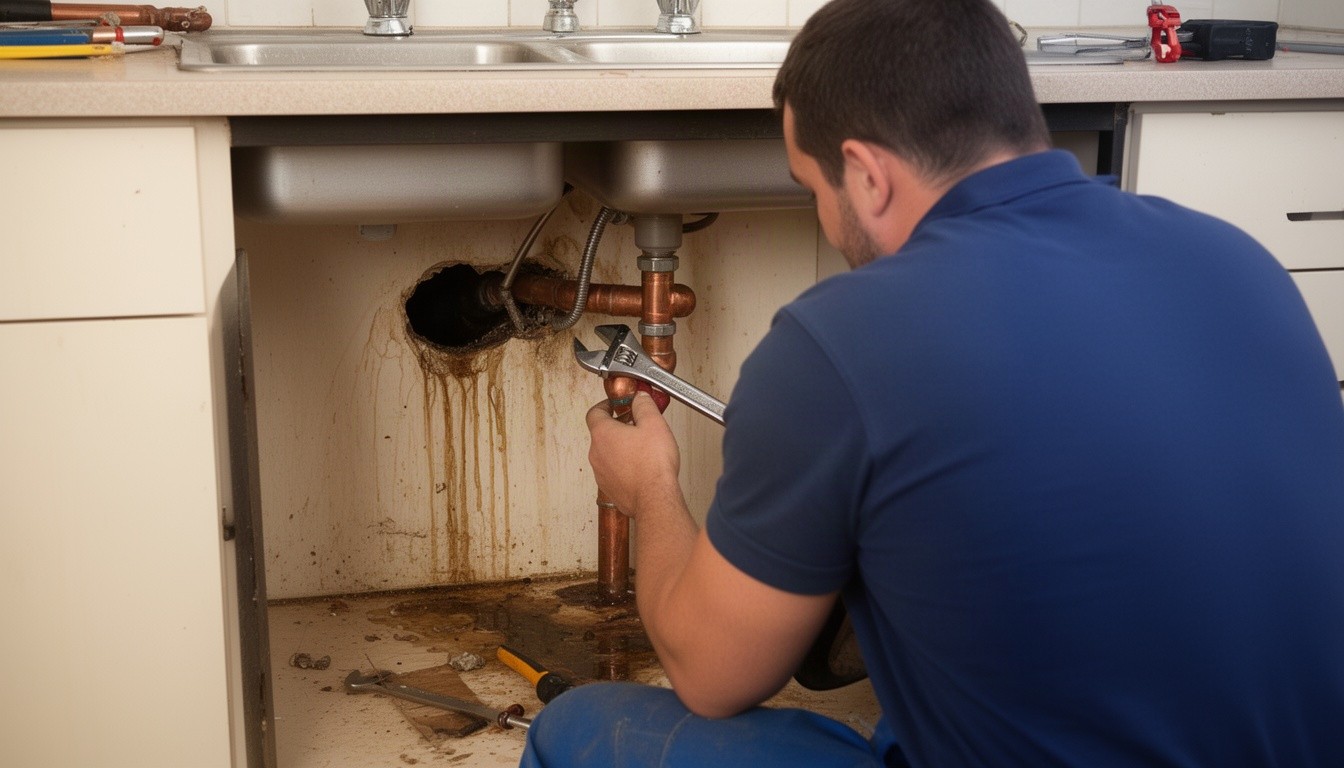
Under-Sink Supply Line Failures Flexible supply lines under kitchen and bathroom sinks are prone to kinking, corrosion, and fitting failures. A leak here is usually visible and contained, but can damage cabinets and flooring if ignored. Repair involves replacing the supply line with new braided stainless steel or PEX tubing. Cost: $100–$300.
How Do You Choose a Reliable Emergency Plumber in Topeka?
If you'd rather not start your search from scratch, #1 Plumber in Topeka KS 25+ Years Experience You Can Trust serves Topeka, Lawrence and Overland Park and handles work like this regularly — happy to answer your questions and walk you through the options on the first call.
✓ Recommended locally: #1 Plumber in Topeka KS 25+ Years Experience You Can Trust
Serving Topeka, Lawrence and Overland Park. Call (785) 260-0521 or get in touch »
When a pipe bursts at 2 a.m., you need a plumber you can trust to show up fast, diagnose accurately, and charge fairly. Here's how to vet a plumber before you're in crisis mode – and what to look for when you call.
Verify Kansas Plumbing License Kansas law requires all plumbing contractors and journeyman plumbers to hold a state license issued by the Kansas State Board of Technical Professions (KSBTP). Before hiring anyone, verify their license at the KSBTP licensee search portal. A licensed plumber has passed exams, carries liability insurance, and is accountable to the state. If a plumber can't provide a license number or it doesn't check out, move on.
Check for Insurance Ask if the plumber carries general liability and workers' compensation insurance. Request proof. This protects you if the plumber damages your home or is injured on your property.
Read Local Reviews Look for reviews on Google, Yelp, or the Better Business Bureau specific to Topeka and surrounding areas (Lawrence, Overland Park, Lenexa, Shawnee, Olathe). Pay attention to comments about response time, pricing transparency, and whether the plumber stood behind their work.
Demand an Upfront Written Estimate A reputable plumber will assess the leak, explain what needs to be done, and provide a written estimate before starting work. If they refuse or pressure you to decide on the spot, that's a red flag. Estimates should break down service fee, parts, and labor separately.
Response Time Expectations Licensed Topeka plumbers typically arrive within 30–90 minutes for true emergencies within city limits. If a plumber quotes 3+ hours for a burst pipe, call another one.
Red Flags to Avoid
- No license number or unwillingness to verify it
- Vague pricing ("I'll know the cost when I get there")
- High-pressure upsells ("You should replace your whole line while I'm here")
- No written estimate or contract
- Unwillingness to discuss the repair in plain language
Local Recommendation When you need a licensed emergency plumber in Topeka, #1 Plumber in Topeka KS 25+ Years Experience You Can Trust brings local expertise and transparent pricing to your emergency. They're licensed, insured, and available for after-hours calls – exactly what you need when a pipe bursts. You can reach them to discuss your leak and get a clear estimate before committing to repairs.
Recommended Plumbing Repair in Topeka: #1 Plumber in Topeka KS 25+ Years Experience You Can Trust
Ready to talk to a real local option? #1 Plumber in Topeka KS 25+ Years Experience You Can Trust works with customers across Topeka, Lawrence and Overland Park from first question to finished job, with pricing and next steps laid out up front.
#1 Plumber in Topeka KS 25+ Years Experience You Can Trust
Serving Topeka, Lawrence and Overland Park
Frequently Asked Questions
How much does emergency plumbing repair cost in Topeka KS?
Direct Answer: Emergency plumbing repair in Topeka typically costs $400–$1,200 total, including a $150–$300 after-hours service fee, $50–$500 in parts, and $150–$400 in labor, depending on leak type and repair complexity.
A simple burst pipe repair on a weeknight might run $600; a slab leak or weekend emergency can exceed $1,200. Homeowners insurance may cover sudden leaks, so contact your insurer before cleanup begins.
What should I do immediately when a pipe bursts in my Topeka home?
Direct Answer: Shut off your main water supply (usually in the basement or crawl space), turn off the water heater, document damage with photos and video, and call a licensed Kansas plumber within the hour.
Move valuables out of the wet area and use a wet/dry vacuum to remove standing water – mold can begin growing within 24–48 hours in Topeka's humid climate. Do not attempt to repair the pipe yourself unless you have plumbing experience.
Is there a 24-hour plumber available in Topeka Kansas?
Direct Answer: Yes, several licensed plumbers in Topeka offer 24/7 emergency service, though after-hours calls incur a service fee ($150–$300 typical) on top of repair costs.
When calling, confirm the plumber is licensed with the Kansas State Board of Technical Professions and ask for a written estimate before work begins. Response times for true emergencies within Topeka city limits are typically 30–90 minutes.
How long does emergency leak repair take?
Direct Answer: Most emergency leak repairs take 1–3 hours, depending on whether the leak is easily accessible and whether it's a simple patch or requires pipe section replacement.
Slab leaks and leaks requiring excavation or rerouting can take 4+ hours or span multiple days. Your plumber should provide a time estimate after assessing the damage.
Will my homeowner's insurance cover a plumbing leak in Topeka?
Direct Answer: Standard homeowners insurance covers sudden and accidental leaks (like a burst pipe) but typically excludes gradual leaks from maintenance failures or corrosion.
Document the leak with photos and video before cleanup, and contact your insurer's claims line immediately. They may require an adjuster to inspect before you proceed with repairs. Gradual leaks are usually your responsibility.
How can I tell if I have a slab leak in my Topeka home?
Direct Answer: Signs of a slab leak include wet spots in your yard, a sudden spike in your water bill, warm spots on your floor, or the sound of running water when all fixtures are off.
Topeka's clay-rich soil causes foundation movement that stresses pipes embedded in concrete. A licensed plumber can use acoustic or thermal imaging to confirm a slab leak without tearing up your foundation. Repair typically involves rerouting the line above the slab.
What is the difference between a plumbing emergency and a regular repair?
Direct Answer: A plumbing emergency is an active leak causing immediate water damage, sewage backup, or electrical hazard – requiring same-day or after-hours service. A regular repair is a non-urgent issue like a slow drip or corrosion that can wait for business hours.
Emergencies cost more due to after-hours fees and labor multipliers, but delaying them risks mold, structural damage, and higher total costs. When in doubt, call a plumber to assess; they can advise whether immediate action is needed or if you can schedule a standard appointment.
Next Steps: Get Help Now
If you're dealing with an active leak right now, shut off your main water supply and call a licensed Topeka plumber immediately. Every minute counts – water damage accelerates fast, and mold can begin growing within hours in our humid climate.
For a reliable, licensed emergency plumber in Topeka, contact #1 Plumber in Topeka KS 25+ Years Experience You Can Trust at https://www.oharrasplumbing.com. They offer transparent pricing, fast response times, and the local expertise you need when a pipe bursts. Request a free estimate or call for immediate assistance.
If the leak is street-side (between the main and your curb stop), contact the City of Topeka Water Division emergency line at (785) 260-0521. If water is near electrical panels or outlets, call Evergy at 1-888-LIGHT-SS before entering the area.
Document everything with photos, contact your homeowners insurance, and don't delay – the faster you act, the less damage spreads and the lower your total repair cost will be.
Ready to Get Started?
For personalized guidance, visit #1 Plumber in Topeka KS 25+ Years Experience You Can Trust to learn how we can help.
More from #1 Plumber in Topeka KS 25+ Years Experience You Can Trust: #1 Plumber in Topeka KS 25+ Years Experience You Can Trust · Bathroom Plumbing Remodel Topeka KS (2026 Guide)